Susan S. Moore — January 12, 2026
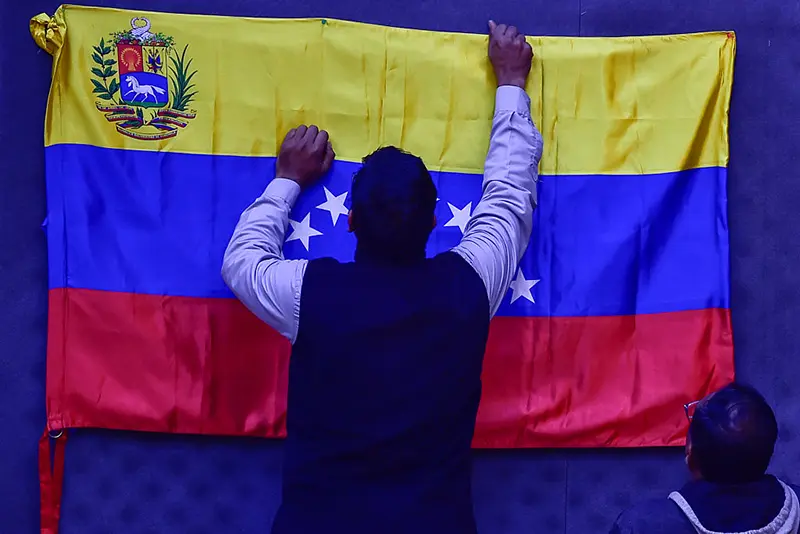
In the weeks since U.S. forces captured Venezuelan President Nicolás Maduro in a dramatic operation that has rattled global diplomacy, the Trump administration is moving quickly to reshape Venezuela’s economic and security landscape — with major implications for American energy interests, international law, and the future of Caracas.
President Donald Trump has invited top executives from major U.S. and international oil companies to the White House this week to discuss investment opportunities aimed at revitalizing Venezuela’s long-neglected energy sector. Companies reportedly in attendance include Chevron, Exxon, ConocoPhillips, Valero, Shell and others poised to help rebuild production infrastructure in a country once rich with hydrocarbon promise.
Trump has publicly framed these talks as mutually beneficial. A White House spokesperson said that renewed investment would both restore Venezuela’s oil infrastructure and generate economic returns for American firms while benefiting the Venezuelan people.
Energy Riches, Rusted Infrastructure
Venezuela’s energy wealth is staggering on paper. The nation holds the largest proven oil reserves in the world, estimated at roughly 303 billion barrels, largely concentrated in the Orinoco Belt — a heavy crude region that U.S. refiners are particularly well-equipped to process.
Yet decades of socialist mismanagement, sanctions and underinvestment have left the sector in disrepair. Production collapsed from millions of barrels per day to a fraction of that output before the recent crisis. Analysts warn that restoring capacity will require not just billions in capital but political stability — a tall order in the immediate aftermath of Maduro’s ouster.
Beyond oil, Venezuela’s mineral wealth — including reserves of gold, nickel, bauxite and rare earth elements — has drawn interest from investors and policymakers focused on critical supply chains. Sector analysts note that these strategic minerals, long underdeveloped, could play a significant role in global industrial markets well beyond hydrocarbons.
Legal, Security Fronts: DEA and ‘Cartel of the Suns’
On the law enforcement front, the U.S. Drug Enforcement Administration (DEA) and Department of Justice have intensified their targeting of networks tied to Venezuela’s former ruling elite. The so-called “Cartel of the Suns” — a controversial label used by U.S. officials for Venezuelan military and government figures accused of facilitating drug trafficking — is now a focal point of federal narco investigations.
Federal prosecutors allege that top Maduro associates conspired with foreign cartels and militias to route cocaine into the United States over decades, a claim that formed the basis for the superseding indictment under which Maduro and his wife, Cilia Flores, were arraigned in New York.
DEA sources say current efforts are zeroing in on leadership figures previously shielded by Maduro’s regime, with coordinated enforcement actions aimed at dismantling remaining operations believed to fuel narcotics flows into the U.S. homeland.
Contested Legality and Global Reaction
Critics at home and abroad have challenged the legal basis for the operation that removed Maduro from power, with arguments centering on sovereignty and international law. At the United Nations Security Council, U.S. envoys defended the actions as targeted law enforcement, while adversaries described them as a violation of the U.N. Charter.
Even domestically, legal experts and some media commentators have questioned whether the narrative of cartel leadership is legally sound, noting adjustments in indictments and court filings that appear to address definitional challenges around the “Cartel of the Suns” label itself.
Looking Ahead
As Trump’s team courts energy executives and deepens law enforcement pressure on alleged drug networks, Venezuela stands at a precarious crossroads. The restoration of oil production and development of mineral wealth promise economic renewal — but hinge on political stability, legal clarity and international cooperation that remains elusive.
The unfolding situation will test Washington’s ability to balance strategic interests with the rule of law in a nation whose vast natural resources have long captivated global powers but whose people have borne the brunt of decay and conflict.
Susan S. Moore is a world news reporter focused on international diplomacy, conflict, and the political forces shaping global relations.