President pushes for $100 billion investment at White House meeting, but major oil executives remain cautious about returning to unstable nation
By Greg Shipley – January 9, 2026
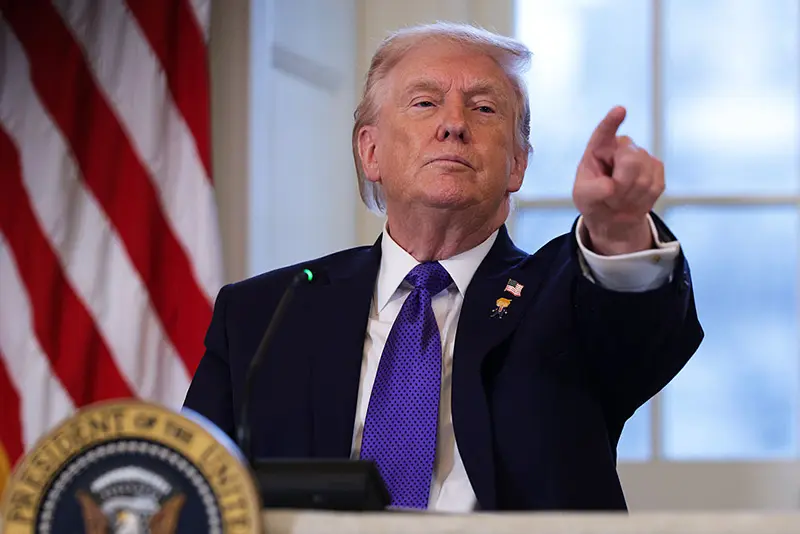
WASHINGTON — President Donald Trump announced Friday that Venezuela will transfer up to 50 million barrels of oil to the United States in the wake of the military operation that captured dictator Nicolás Maduro, as the administration convened top oil executives at the White House to pitch a sweeping plan to revitalize the South American nation’s crumbling energy infrastructure.
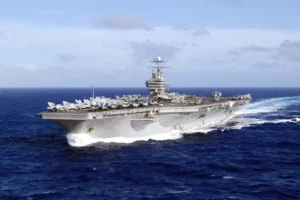
The development marks the latest chapter in a dramatic week that began with a wide-scale “air, land and sea” military attack on Venezuela early Saturday involving at least 150 aircraft, resulting in Maduro’s capture and his subsequent detention in a Brooklyn federal facility.
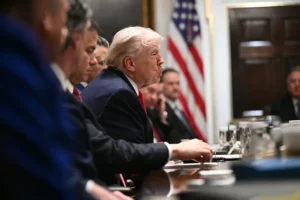
Speaking before executives from Chevron, ExxonMobil, ConocoPhillips, Shell, and more than a dozen other energy companies, Trump outlined an ambitious strategy to sell Venezuelan oil at market prices while controlling the proceeds to benefit both nations. Energy Secretary Chris Wright has been tasked with executing the plan immediately.
Oil Giants Express Caution
But the president’s grand vision hit a wall of skepticism from the industry’s biggest players during Friday’s East Room gathering.
ExxonMobil CEO Darren Woods delivered perhaps the bluntest assessment, describing Venezuela as “uninvestable” without major governmental and legal reforms. The megacorporation’s chief executive pointed to a painful history that makes his company wary of a third entry into the Venezuelan market.
“We’ve had our assets seized there twice,” Woods told the president, according to CNBC, noting that re-entering “would require some pretty significant changes from what we’ve historically seen.”
The wounds are still fresh. Former Venezuelan leader Hugo Chávez nationalized ExxonMobil and ConocoPhillips’ operations around 2007, forcing both companies to exit. ConocoPhillips is still seeking roughly $12 billion in restitution, while ExxonMobil pursues nearly $2 billion in damages from arbitration cases.
ConocoPhillips CEO Ryan Lance described his company as Venezuela’s largest non-sovereign creditor during the meeting. When Trump assured him the company would recover “a lot” of its money, the president added a caveat that may have raised eyebrows: “We’re going to start with an even plate” and “we’re not going to look at what people lost in the past.”
A Contrasting Vision of Reality
Treasury Secretary Scott Bessent appeared to acknowledge the hesitation from industry titans Thursday, telling an audience in Minnesota that “the big oil companies who move slowly, who have corporate boards, are not interested”.
Instead, Bessent said smaller independent oil companies and wildcatters have been flooding the administration with interest, claiming “our phones are ringing off the hook” from those eager to enter Venezuela.
The dichotomy reveals a fundamental challenge for the Trump administration: While smaller players may be willing to gamble on Venezuela’s uncertain future, the massive capital investments needed to truly revitalize the country’s oil sector likely require buy-in from the industry’s heavyweight corporations.
Venezuela possesses the world’s largest proven oil reserves—more than 300 billion barrels, nearly quadruple those of the United States. Yet mismanagement, corruption and the rising cost of extraction caused production to fall to roughly 800,000 barrels a day from a peak of 3.5 million barrels daily in the late 1990s.
The Road Ahead
Energy Secretary Wright struck a more optimistic tone in an interview with CNBC, suggesting that Venezuelan production could increase by several hundred thousand barrels per day in the short to medium term with relatively small capital deployments. Chevron, the only major U.S. oil company currently operating in Venezuela, has been providing the administration with daily updates on conditions in the country.
“They’re actually working [under] this regime,” Wright said. “So with them, how can we provide incremental tweaks or changes to allow their model to grow even more?”
Trump emphasized at Friday’s meeting that oil companies would receive security guarantees and military protection for their operations, declaring “We’re not afraid of boots on the ground” and promising that the U.S. stands ready to launch additional military strikes if necessary to secure American business interests.
The president stated that a group including Secretary of State Marco Rubio and Defense Secretary Pete Hegseth would oversee Venezuela’s governance during what he described as a transitional period. Trump has said Venezuelan Vice President Delcy Rodríguez, who was sworn in as interim president, is cooperating with U.S. demands.
Congressional Pushback Grows
While Trump projects confidence, the operation has generated significant controversy on Capitol Hill. The Senate advanced a war powers resolution on Thursday by a 52-47 vote, aimed at preventing further military action in Venezuela without congressional authorization.
Democratic lawmakers have questioned both the legality and strategic wisdom of the intervention. Senate Minority Leader Chuck Schumer told reporters after Monday’s classified briefing that administration officials “have no idea what steps 2 through 10 are going to be”.
Even some Republicans expressed concerns. Senator Rand Paul of Kentucky, a longtime skeptic of military interventions, joined Democrats in advancing the war powers measure.
The administration has faced criticism for not notifying Congress before the operation. Secretary of State Rubio acknowledged that lawmakers were not given advance warning of the military action, a break from typical protocol that has raised questions about executive authority.
International Reactions Mixed
The operation has drawn mixed reactions from the international community. The United Nations Secretary-General expressed concern about what he characterized as a violation of the UN Charter and international law norms, according to statements from Venezuela’s UN ambassador.
Cuba issued a strong condemnation, with the government announcing that 32 Cubans “lost their lives in combat” during the operation while “carrying out missions” on behalf of Venezuela’s military.
Venezuelan opposition leader María Corina Machado, who recently won the Nobel Peace Prize for her democracy advocacy, has called for Edmundo González Urrutia—widely regarded as the legitimate winner of Venezuela’s disputed July 2024 election—to assume the presidency. González is currently in exile in Spain.
Interestingly, Trump downplayed Machado’s influence during his Mar-a-Lago press conference, claiming she “doesn’t have the support or the respect within the country”, despite her 72% approval rating among Venezuelans in a March 2025 poll.
What Comes Next
As of Friday evening, no oil companies have publicly committed to specific investment figures or timelines for Venezuelan operations. The Trump administration continues to control seized oil tankers and has announced plans to sell their cargo, holding proceeds in U.S.-controlled accounts as leverage over Venezuela’s interim government.
Wright indicated that repaying the debts owed to ExxonMobil and ConocoPhillips is not an immediate priority, with the administration instead focused on stabilizing Venezuela’s economy through oil sales. However, that approach may make it even harder to convince those companies to commit billions in new investments.
The situation on the ground in Caracas remains tense but relatively calm. Businesses have largely reopened after panic buying following Maduro’s capture, though the country faces deep uncertainty about its political future and economic trajectory.
For Trump, the Venezuelan gambit represents a high-stakes test of his “America First” foreign policy vision. The president has long expressed interest in controlling Venezuela’s resources, telling MSNBC host Joe Scarborough this week that unlike in Iraq, this time “we’re going to keep the oil”.
Whether America’s oil giants will join him in that venture—and at what cost—remains an open question that could define the success or failure of this audacious intervention.
Greg Shipley covers U.S. news and politics, with a focus on constitutional issues, national security, and government accountability.