By Wayne Roberts — January 19, 2026
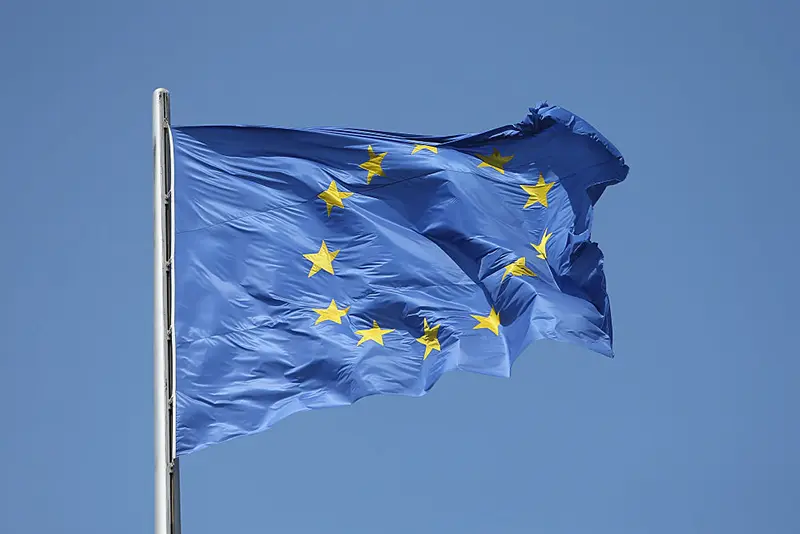
BRUSSELS — European leaders from eight NATO and EU nations issued a blistering rebuke this week of President Donald Trump’s threatened U.S. import tariffs, calling the policy “dangerous,” coercive, and a threat to decades-long transatlantic cooperation.
At the heart of the dispute is Trump’s move to levy tariffs on imports from Denmark, Norway, Sweden, France, Germany, the Netherlands, Finland and the United Kingdom due to their opposition to his bid to secure Greenland — a semi-autonomous Danish territory the U.S. has publicly pursued for strategic reasons. Trump’s announcement would see tariffs start at 10% on Feb. 1 and escalate to 25% by June if Greenland is not ceded to Washington.
Joint Statement: “Undermine Transatlantic Relations”
In a coordinated diplomatic response, the eight European governments stated that Trump’s tariff threats “undermine transatlantic relations and risk a dangerous downward spiral.” The joint text emphasized the shared security interests within NATO and insisted that planned military cooperation in the Arctic “poses no threat to anyone.”
The statement marks one of the strongest unified rebukes of U.S. economic policy by Western allies in recent memory, highlighting growing unease with what European capitals view as coercive tactics.
Macron: No Intimidation Will Sway Us
French President Emmanuel Macron directly addressed Trump’s tariff threat, labeling it “unacceptable,” and pledging that Paris — along with its partners — would not yield to pressure. Macron said on social media that “no intimidation nor threat will influence us, neither in Ukraine, nor in Greenland, nor anywhere else in the world when we are confronted with such situations.”
The French presidency also indicated discussions about invoking the European Union’s Anti-Coercion Instrument — a tool designed to counter foreign economic pressure — signaling that Paris is prepared to use legal and economic mechanisms to push back against Washington’s policy.
Sweden: “We Will Not Be Blackmailed”
Swedish Prime Minister Ulf Kristersson echoed that sentiment in a parallel statement, explicitly rejecting the tariff threats as “blackmail” and asserting that Sweden and its allies would not relent in the face of economic pressure. Kristersson wrote that only Denmark and Greenland have the authority to decide the island’s future, and he stressed ongoing coordination with other EU states, Norway, and the U.K. on a response.
This language reflects a broader European insistence that internal alliance disputes not be resolved through punitive trade measures.
Germany, France Ministers Emphasize Allied Respect
German Vice Chancellor and Finance Minister Lars Klingbeil, alongside French Finance Minister Roland Lescure, reinforced the hard line in Berlin. “Blackmail between allies of 250 years … is obviously unacceptable,” Lescure said at a joint press event, while Klingbeil stressed Europe “will not allow ourselves to be blackmailed.”
Their comments came amid preparations for an emergency EU summit in Brussels this week to discuss possible retaliatory measures, including the reimposition of roughly €93 billion in tariffs on U.S. goods and use of the Anti-Coercion Instrument.
Transatlantic Impact & Future Talks
The dispute now looms over upcoming meetings between European officials and U.S. representatives at the World Economic Forum in Davos, where some leaders hope to defuse tensions through direct engagement. Others, however, caution that Trump’s hardline tariff stance signals a broader shift in U.S. trade policy toward Western allies.
While the European Council and NATO allies continue to assert the importance of shared security and economic cooperation, this tariff showdown underscores a significant strain in transatlantic relations, with both sides signaling that diplomatic engagements in the coming days will be pivotal in determining whether the alliance endures intact.
Wayne Roberts is a journalist specializing in world affairs, covering international politics, global security, and major geopolitical developments.