By Maria Jones | January 13, 2026
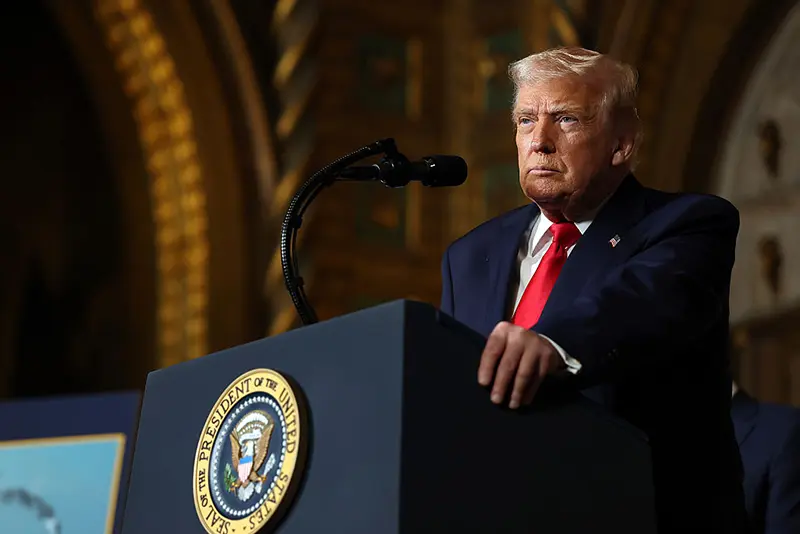
President Donald Trump announced Tuesday that his administration will halt all federal payments to sanctuary cities and states that house them beginning February 1, marking a striking escalation in federal immigration enforcement and budget policy. Trump made the declaration during a speech at the Detroit Economic Club, framing the move as necessary to stop local policies that, in his view, “protect criminals at the expense of American citizens” and contribute to crime and fraud nationwide.
“Starting Feb. 1, we’re not making any payments to sanctuary cities or states having sanctuary cities because they do everything possible to protect criminals at the expense of American citizens, and it breeds fraud and crime,” Trump said, reiterating long-held criticisms of jurisdictions that limit cooperation with federal immigration authorities.
The policy shift is expected to affect a broad spectrum of federal funding streams — from law enforcement grants to social service programs — although the administration has not provided a detailed list of exactly which programs will be cut. Federal courts previously blocked similar efforts to condition grants on immigration cooperation during Trump’s earlier presidency, and legal challenges are widely anticipated this year.
Minnesota Funding Suspensions Highlight Broader Crackdown
As part of his broader effort to address what the White House describes as “fraud and abuse,” Trump also said the administration has suspended payments tied to suspected scammers in Minnesota, sharply criticizing Governor Tim Walz. “It’s a great state. It was a great state. Now it’s getting destroyed by that stupid governor,” Trump said, accusing Walz of presiding over unchecked fraud.
Federal officials have been involved in multiple actions targeting Minnesota in recent weeks. The Department of Health and Human Services froze child care funds and demanded audits of state programs after allegations of widespread fraud involving day care centers, and federal authorities are reportedly reviewing billions in federal benefit dollars tied to alleged misuse. Minnesota officials, including Walz, pushed back, arguing that fraud is being aggressively investigated and that some federal actions are politically motivated.
Additionally, state officials are appealing the Trump administration’s decision to withhold roughly $2 billion in Medicaid funding pending audits and fraud reviews. The dispute has heightened tensions between Washington and Minnesota leadership, with state leaders accusing the administration of “weaponizing” federal programs.
Legal Fights Loom And Political Stakes Rise
Trump’s plan is likely to prompt immediate legal challenges similar to those seen in prior sanctuary funding disputes. In opposing actions last year, federal judges blocked administrations from freezing billions in childcare and family support dollars to several states, including Minnesota. Critics argue that cutting funding would hurt vulnerable families who depend on federal assistance.
Sanctuary jurisdictions — typically cities or states that limit cooperation with U.S. Immigration and Customs Enforcement (ICE) — have long been a flashpoint in national immigration debates. Proponents argue that sanctuary policies promote community trust and public safety, while opponents say they undermine law enforcement and federal immigration law.
Trump’s announcement comes as the GOP continues to push a hardline immigration and border security platform ahead of the 2026 election cycle. Republican lawmakers broadly praised the funding cutoff, with supporters saying it holds local leaders accountable for public safety and fiscal responsibility. Democratic officials, meanwhile, have pledged to fight the cuts in court and through legislative channels.
Maria Jones is a writer for U.S. politics, elections, public policy, and the cultural debates shaping American governance.