By Maria Jones – January 30, 2026

WASHINGTON – Lawmakers in Congress narrowly averted a looming government shutdown Friday after President Donald Trump and Senate Democrats reached a last-minute compromise on federal spending. The agreement funds most of the federal government through September while splitting off the Department of Homeland Security (DHS) into a separate, short-term continuing resolution to allow further debate on immigration enforcement reforms.
Bipartisan Deal Pushes Funding Through September, DHS Separately Extended
Under the deal hammered out Thursday and into the early hours of Friday, Democrats and Republicans agreed to advance five full-year funding bills covering key agencies like Defense, Transportation, Labor, Health and Human Services, and Education, ensuring those departments remain funded through the end of the fiscal year in September. DHS, which oversees Immigration and Customs Enforcement (ICE) and Customs and Border Protection (CBP), was separated from that package and will be funded at current levels for two weeks to allow additional negotiation on controversial immigration policies.
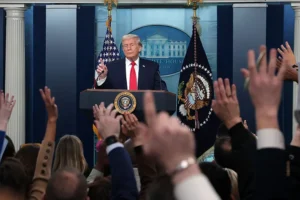
President Trump publicly backed the compromise, urging lawmakers to vote in favor of the funding package and warning of the economic and logistical harm a shutdown would cause.
Graham’s Objection Creates Last-Minute Uncertainty
Despite the broad agreement, Republican Sen. Lindsey Graham of South Carolina blocked the Senate from bringing the measure to a vote Thursday night, creating a brief period of uncertainty as a partial shutdown deadline loomed. Graham raised concerns about the treatment of immigration officers and objected to language in the bill that repeals a controversial provision allowing senators to sue the government if their phone data are accessed during investigations. His hold forced negotiators to revisit elements of the deal before the Senate reconvened Friday.
The split funding approach allowed Senate leaders to press forward while still addressing GOP dissent. The House of Representatives, which is out of session until Monday, must still approve the separated funding bills before they can be signed into law, leaving open the possibility of a brief shutdown over the weekend.
Immigration Enforcement Debate at the Heart of Negotiations
The deal comes amid heightened national scrutiny of federal immigration enforcement tactics, particularly in Minnesota, where federal agents have been conducting a major operation known as “Operation Metro Surge.” In recent weeks, two U.S. citizens – including 37-year-old ICU nurse Alex Pretti – were fatally shot during enforcement actions, sparking protests and demands for policy reform.
Democrats have pressed for reforms to ICE and CBP operations as a condition for supporting long-term funding for DHS, including requirements for body cameras, the prohibition of masks during enforcement actions, and strengthened oversight mechanisms. Republicans have been divided on these demands, with some calling for tougher enforcement policies and others expressing concern about agency morale and public perception.
The Minnesota controversy has intensified broader political debates ahead of the 2026 midterm elections, bringing immigrant enforcement and federal spending priorities into sharper focus. A civil rights investigation into the Pretti killing has been opened by the U.S. Justice Department, adding further pressure on policymakers to balance enforcement with accountability.
What’s Next in Congress
With the Senate now poised to vote on the separated funding bills, attention has turned to the Republican-controlled House. Lawmakers must return from recess to approve the Senate’s package. Failure to act promptly could trigger a temporary partial shutdown starting Saturday night, although congressional leaders have voiced strong support for preventing a lapse in funding.
Negotiators say the interim DHS funding extension buys critical time to address immigration enforcement concerns without dragging down funding for other core government functions. As lawmakers prepare for further debate, both sides maintain that the compromise avoids deeper disruption while keeping the focus on contentious policy reforms in the weeks ahead.
Maria Jones is a writer for U.S. politics, elections, public policy, and the cultural debates shaping American governance.