With Venezuelan oil cut off and Havana’s lights flickering out, the president hints at major announcement while Díaz-Canel vows to fight “to the last drop of blood”
By Greg Shipley | January 12, 2026
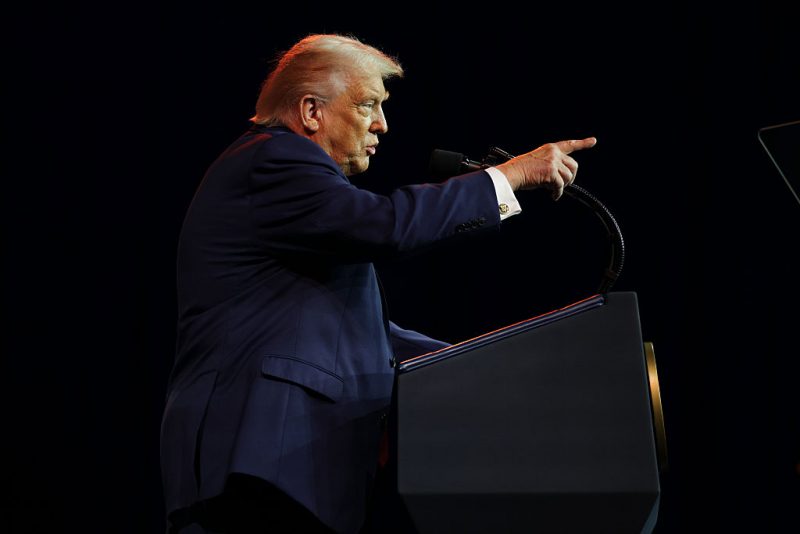
WASHINGTON — President Donald Trump teased a major deal with Cuba on Sunday night, refusing to elaborate on specifics but promising revelations “very soon” as the communist island nation faces what could be its most severe economic crisis in decades.
“Cuba, you’ll find out very soon. We’re talking to Cuba, you’ll know soon enough,” Trump told reporters aboard Air Force One when pressed about what kind of agreement he’s pursuing with Havana. His cryptic response has sent speculation into overdrive across Miami’s Cuban exile community and beyond.
The stakes couldn’t be higher. With Venezuelan oil supplies completely cut off following the capture of Nicolás Maduro, Cuba faces an energy apocalypse that’s already plunging the island into darkness for up to 20 hours per day in some regions. Trump’s vague promise of a deal comes as Cuban President Miguel Díaz-Canel defiantly declared his regime would defend itself against any interference.
The Oil Spigot Shuts Off
The immediate trigger for Cuba’s crisis is brutally simple: Trump has effectively terminated the oil lifeline that kept the island’s economy on life support for more than two decades.
Shipping data confirms no oil tankers have departed Venezuelan ports for Cuba since U.S. Delta Force commandos seized Maduro in Caracas on January 3. Those shipments—approximately 30,000 to 35,000 barrels per day—represented roughly 50% of Cuba’s oil deficit, according to Jorge Piñón, an energy expert at the University of Texas at Austin Energy Institute.
Without that Venezuelan crude, Cuba’s already-collapsing electrical grid has descended further into chaos. The Cuban Electric Union projects power shortages reaching nearly 1,800 MW during peak hours in early January 2026—a deficit representing a massive chunk of the country’s total demand.
The capital Havana, once insulated from the worst blackouts, now faces 10 hours or more without electricity daily. In other parts of the country, residents endure darkness for up to 20 hours straight. Cuba’s aging oil-fired thermal plants, built decades ago and barely maintained, simply cannot function without fuel.
“That’s why the Venezuelan supply is so important, because those 30,000 to 35,000 barrels a day represent 50% of the deficit that Cuba has of oil,” Piñón explained to NBC News.
On Sunday, Trump made the cutoff explicit in characteristically blunt terms: Cuban officials relied on massive amounts of fuel and money from Venezuela for years, Trump wrote on Truth Social, and in return sent security services to prop up Chavista dictators.
“Most of those Cubans are DEAD from last week’s USA attack, and Venezuela doesn’t need protection anymore from the thugs and extortionists who held them hostage for so many years,” Trump continued. Havana confirmed 32 of its military and intelligence personnel were killed during the U.S. operation.
The president’s conclusion was stark: “THERE WILL BE NO MORE OIL OR MONEY GOING TO CUBA – ZERO! I strongly suggest they make a deal, BEFORE IT IS TOO LATE.”
Díaz-Canel Pushes Back
Cuba’s response has been predictably defiant, even as the island sinks deeper into crisis.
Cuban President Miguel Díaz-Canel firmly rejected external interference in Cuba’s affairs on Sunday, insisting “no one dictates what we do.” The Cuban leader declared that the island has been victimized by the United States, not the aggressor, and vowed his government would be ready to defend itself.
“Cuba does not aggress; it is aggressed upon by the United States for 66 years, and it does not threaten; it prepares, ready to defend the Homeland to the last drop of blood,” Díaz-Canel said in a post on X.
He took particular aim at Trump’s transactional approach to foreign policy. Those who convert everything into a transaction have no moral standing to criticize Cuba for anything, the Cuban president said in an apparent reference to Trump.
Cuban Foreign Minister Bruno Rodriguez was equally combative, asserting Cuba’s “absolute right” to import fuel from economic partners without U.S. interference. He rejected Trump’s characterization that Cuba exchanged security services for Venezuelan oil and money—though the physical presence of Cuban intelligence and military personnel in Venezuela has been well-documented for years.
“The US is behaving like a criminal and uncontrolled hegemon that threatens peace and security not only of Cuba and this hemisphere but of the entire world,” Rodriguez declared.
The Rubio Factor
If Cuba’s government is concerned, they have good reason to be—and not just because of Trump’s threats. The real architect of maximum pressure on Havana sits at the State Department: Secretary of State Marco Rubio, whose family fled Castro’s revolution and who has made crushing Cuba’s communist regime a lifelong mission.
Rubio, the son of Cuban immigrants raised in Miami’s exile community, has been remarkably candid about his goals. Last week, following Maduro’s capture, Rubio warned Havana in no uncertain terms.
“If I lived in Havana, and I was in the government, I’d be concerned — at least a little bit,” Rubio said during a press conference detailing the Venezuela operation.
Trump has amplified that message in provocative fashion. On Sunday, the president reposted a message on Truth Social suggesting Rubio could become president of Cuba “when the government falls,” adding his own comment: “Sounds good to me!”
Whether Trump was joking or testing the waters is unclear. What’s undeniable is that Rubio has become the administration’s point person on Latin America policy, taking on multiple high-profile roles simultaneously. His unanimous 99-0 Senate confirmation reflected broad bipartisan support for his hardline approach to communist regimes in the Western Hemisphere.
“This is the Western Hemisphere. This is where we live—and we’re not going to allow the Western Hemisphere to be a base of operation for adversaries, competitors, and rivals of the United States,” Rubio declared on NBC’s Meet the Press.
The implication is clear: With Venezuela now under U.S. control, Cuba’s turn may be next.
An Island on the Brink
The human toll of Cuba’s crisis is staggering. Most Cubans already lived without electricity for much of each day even before the Venezuelan cutoff. Now the situation has deteriorated to the point where basic services are collapsing.
Food spoils without refrigeration. Hospitals struggle to maintain power for critical equipment, relying on emergency generators that depend on increasingly scarce diesel. The tourism industry—one of Cuba’s few remaining revenue sources—is crippled as hotels and restaurants cannot guarantee power.
“There’s no electricity here, there’s no power here, there’s no gas here, no liquefied gas. There’s nothing here,” Maria Elena Sabina, a 58-year-old Havana resident, told Reuters. “The whole committee has to make a decision because it is the people who are suffering.”
Cuba has suffered from severe power shortages due to its dependence on aging infrastructure and scarce fuel, with daily disruptions expected to remain very high while independent media report the system is starting in worse shape than the previous year.
The government’s promises of renewable energy development—including solar parks built with Chinese assistance—remain largely aspirational. By January 2026, approximately 1,100 MW of new solar capacity was expected to be operational, but without battery storage, these facilities only generate electricity during daylight hours, providing minimal relief during evening peak demand when blackouts hit hardest.
Meanwhile, Cuba’s second-largest oil supplier, Mexico, faces growing pressure from Trump to cut off its own shipments. Mexican President Claudia Sheinbaum has described her country’s fuel exports to Cuba as humanitarian aid, but U.S. lawmakers—particularly Miami Republicans like Rep. Carlos Giménez—are demanding Trump use the 2026 renegotiation of the United States-Mexico-Canada Agreement (USMCA) to force Mexico’s hand.
Between May and August 2025 alone, Mexico shipped over $3 billion worth of subsidized fuel to Cuba through a subsidiary of state oil company Pemex, according to an investigation by Mexicanos Contra la Corrupción y la Impunidad—three times higher than shipments during the previous administration.
What Does Trump Want?
That’s the $50 billion question—and Trump isn’t saying.
In his Air Force One remarks, the president dropped one tantalizing hint about priorities: “One of the things that I want to take care of, and one of the groups that I want to take care of, are people who came from Cuba and were forced to [leave] under pressure,” Trump said. “We have a lot of people who were unfairly forced to leave Cuba, so we’re going to take care of the most important thing right now and take care of the people who came from Cuba and are American citizens or are in our country.”
That language suggests Trump may be seeking some form of restitution or recognition for Cuban exiles—a move that would resonate powerfully with his South Florida political base while being utterly unacceptable to Havana’s communist government.
Other possibilities include:
- Regime change: Trump has repeatedly suggested Cuba’s government is on the verge of collapse. “Cuba now has no income. They got all of their income from Venezuela, from the Venezuelan oil,” Trump told reporters last week. “I think it’s just going to fall.”
- Compensation for nationalized property: American citizens and companies have claims totaling billions of dollars for properties seized after Castro’s 1959 revolution.
- Ending support for U.S. adversaries: Cuba has long hosted intelligence operations for Russia and China, and maintained close ties with Iran.
- Democratic reforms: Though this seems least likely given Trump’s transactional approach and lack of emphasis on human rights in his foreign policy.
Trump’s critics warn that his approach—combining military action, economic strangulation, and vague threats—could backfire spectacularly. The U.S. has tried to topple Cuba’s government for more than 60 years through embargo, sabotage, and even invasion. None of it worked.
Regional Realignment
What makes this moment different is the broader geopolitical shift. The capture of Maduro fundamentally altered the balance of power in the Western Hemisphere. Venezuela’s oil—once used to prop up leftist allies throughout Latin America—is now under U.S. control.
Trump has already announced Venezuela will turn over 30 to 50 million barrels of oil to the United States, and he’s hosted executives from Chevron, Exxon, and Shell to discuss investments in restoring Venezuelan oil infrastructure. The U.S. and Venezuela are progressing on a $2 billion deal to supply up to 50 million barrels of Venezuelan crude to American refineries.
For Cuba, losing its Venezuelan patron is more than an economic crisis—it’s an existential threat to the regime’s survival. Without subsidized oil and financial support, Havana has no obvious path to maintaining even minimal government services.
The CIA’s assessment, according to Reuters, is that while Cuba faces severe strains, there’s no clear evidence the government is about to collapse as Trump has predicted. Key sectors like agriculture and tourism are severely hampered by blackouts and sanctions, but the regime retains control of security forces and maintains enough support—or fear—to prevent organized opposition.
Still, the pressure is unprecedented. Five years of record-breaking emigration—primarily to the United States—has drained Cuba of working-age professionals and created a demographic crisis. Food, fuel, and medicine shortages have pushed the population to breaking point. Trump’s new sanctions pile on top of decades of existing U.S. embargo measures.
The Waiting Game
For now, everyone is waiting to see what Trump’s promised deal entails. Cuban exiles in Miami are hopeful that after more than 60 years, change might finally come to the island. Cuban officials are bracing for whatever comes next while projecting defiance publicly.
And ordinary Cubans? They’re sitting in the dark, wondering if the lights will come back on.
Trump’s “you’ll find out very soon” is classic reality TV showmanship—building suspense before a big reveal. But this isn’t entertainment. Eleven million people are living through a humanitarian crisis that’s getting worse by the day.
Whether Trump’s mysterious deal will alleviate that suffering or accelerate Cuba’s collapse remains to be seen. What’s certain is that Havana faces its most serious challenge since the collapse of the Soviet Union in 1991, which triggered Cuba’s “Special Period” of severe economic hardship.
This time, there’s no obvious patron waiting in the wings. Russia is consumed by its war in Ukraine. China faces its own economic challenges. And the United States—with Maduro in custody and Venezuelan oil under its control—holds all the cards.
“Cuba is a failing nation right now—a very badly failing nation,” Trump told reporters on January 3. “And we want to help the people. It’s very similar in the sense that we want to help the people in Cuba, but we also want to help the people who were forced out of Cuba and are living in this country.”
Whether that “help” takes the form of humanitarian assistance, regime change, or something else entirely, we’ll apparently know “very soon.”
For Cuba, waiting in darkness, that day can’t come soon enough—or is dreaded with every fiber of resistance the regime can muster.
Editor’s Note: Some details about Cuba’s internal situation are based on Cuban state media reports and international monitoring, as independent journalism remains heavily restricted on the island.
Greg Shipley covers U.S. news and politics, with a focus on constitutional issues, national security, and government accountability.