By Greg Shipley
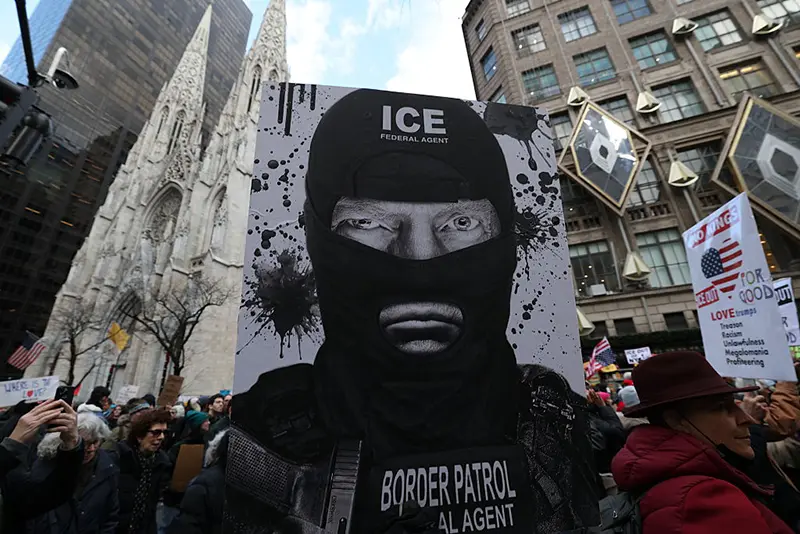
In a dramatic escalation of legal pushback against the Trump administration’s aggressive immigration enforcement strategy, the state of Minnesota and its two largest cities — Minneapolis and St. Paul — have filed a federal lawsuit seeking to halt a sweeping federal immigration operation they characterize as unconstitutional and an overreach of federal power. Illinois and the city of Chicago filed a similar suit on the same day, arguing that Washington’s tactics violate the Tenth Amendment and state sovereignty.
The legal actions, filed in U.S. District Courts on Monday, mark a sharp escalation in state-versus-federal confrontation over immigration enforcement authority.
‘Operation Metro Surge’ Under Fire in Minnesota
Minnesota Attorney General Keith Ellison, joined by Minneapolis Mayor Jacob Frey and St. Paul Mayor Kaohly Her, argued in their complaint that a surge of more than 2,000 federal agents — primarily from Immigration and Customs Enforcement (ICE) and Customs and Border Protection (CBP) — has resulted in widespread civil rights violations and an effective takeover of local law enforcement duties.
The lawsuit targets what critics are calling “Operation Metro Surge”, a federally directed immigration enforcement effort that began late last year and has since expanded into the Twin Cities metro. Officials claim the surge has led to mass arrests, warrantless stops and searches, and an environment of fear that has shuttered schools and disrupted everyday life.
At a news conference announcing the suit, Ellison described the federal presence as a “federal invasion” and emphasized that Minnesota — whose noncitizen immigrant population is significantly below the national average — is being singled out for political reasons rather than legitimate public safety concerns.
The lawsuit alleges multiple constitutional violations, including infringements of the First Amendment and the equal sovereignty principle, and seeks a temporary restraining order to freeze or limit the federal operation.
The legal challenge comes in the aftermath of a controversial incident in which ICE agents fatally shot a 37-year-old Minnesota woman, sparking widespread local protests and renewed scrutiny of federal enforcement tactics.
Illinois and Chicago: Sovereignty and Safety at Stake
Shortly after the Minnesota filing, Illinois Attorney General Kwame Raoul and Chicago Mayor Brandon Johnson filed their own lawsuit against the Department of Homeland Security and other federal officials, including DHS Secretary Kristi Noem and CBP leadership.
Their 103-page complaint paints a stark picture of what it calls a “menacing, violent, and unlawful incursion” by militarized federal agents into Chicago and surrounding communities under “Operation Midway Blitz,” a sweeping interior enforcement campaign launched in autumn 2025.
Illinois officials argue that agents have used tear gas in residential neighborhoods, taken biometric data without consent, and made warrantless arrests that violate both constitutional protections and federal law. The complaint specifically cites alleged Tenth Amendment violations, asserting that the federal government has overstepped by commandeering local law enforcement functions and undermining the state’s sovereignty.
Illinois and Chicago are asking for a sweeping injunction that would bar CBP and ICE from conducting interior immigration enforcement without explicit authorization from Congress and prohibit specific practices they say have terrorized communities.
Constitutional Clash: States’ Rights vs. Federal Enforcement
Legal experts note that these lawsuits elevate a longstanding tension in American federalism. The Tenth Amendment reserves to states certain powers not delegated to the federal government, and plaintiffs in both Minnesota and Illinois argue that sweeping federal immigration actions — particularly interior enforcement and military-style tactics — violate that principle.
While immigration enforcement is indisputably a federal responsibility, opponents argue that unchecked federal action inside states undermines local law enforcement directives, public safety priorities, and constitutional protections.
The administration, for its part, has defended the enforcement surge as necessary to address illegal immigration and related criminal activity — framing it as part of a broader effort to uphold federal law and protect communities. DHS has not yet issued detailed responses to the lawsuits.
What’s Next? Court Battles Loom
Both lawsuits are likely to result in protracted legal battles as federal courts weigh questions of state sovereignty, constitutional protections, and the scope of federal immigration authority.
The Minnesota case, backed by a request for immediate judicial relief, could lead to temporary injunctions that restrict current enforcement actions while litigation continues. Illinois’ suit raises similar stakes, with broad implications for how far federal immigration agents can operate within states that resist cooperation.
As both sides prepare for weeks — if not months — of legal maneuvering, the broader political ramifications are already playing out on national stages, feeding into debates over states’ rights, public safety, and executive authority ahead of the 2026 election cycle.
Greg Shipley covers U.S. news and politics, with a focus on constitutional issues, national security, and government accountability.