By Maria Jones
MINNEAPOLIS — A 37-year-old U.S. citizen, activist, and mother of three, identified as Renee Nicole Good, was fatally shot by an ICE agent during a Department of Homeland Security (DHS) immigration operation in south Minneapolis on January 7, 2026, setting off intense political conflict, public protests, and calls from some lawmakers to impeach Homeland Security Secretary Kristi Noem.
DHS Releases Self-Defense Narrative
According to DHS Secretary Kristi Noem, the ICE officer involved fired his weapon in self-defense after Good allegedly attempted to use her vehicle as a weapon against agents executing a federal enforcement action. Noem and other federal officials characterized the incident as an “act of domestic terrorism,” claiming the woman “blocked” and weaponized her SUV against law enforcement, prompting the use of lethal force to protect the officer and his colleagues.
In a televised press conference, Noem stressed that ICE agents were executing lawful duties in Minneapolis and that the agent’s response was in line with standard defensive training. She insisted that agents repeatedly instructed Good to stop obstructing the operation before shots were fired.
Eyewitness Video and Contradictory Accounts
Video footage circulating online shows an ICE vehicle attempting to navigate a residential street while Good’s SUV sits in the roadway. Witnesses and bystanders captured moments in which the woman’s vehicle appears to back up briefly and then accelerate away, followed by gunfire. Critics note that the video does not clearly show the woman intentionally driving toward officers, challenging the official narrative.
Minneapolis Mayor Jacob Frey has publicly dismissed the federal self-defense claim as “bullshit,” saying that the video he reviewed does not support the administration’s description of the incident. Local authorities and state officials have also disputed aspects of the DHS account, leaving significant questions about what exactly transpired in the moments before the shooting.
Growing Unrest and Protests
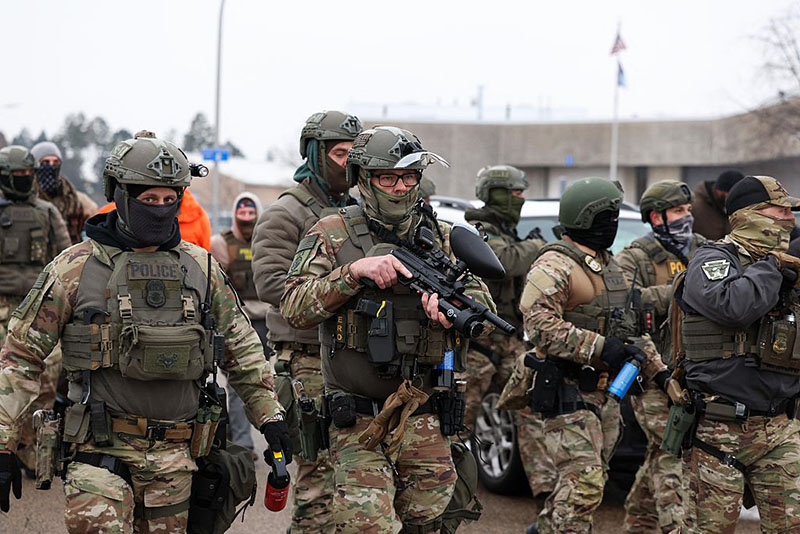
In the days following the shooting, protests erupted in Minneapolis, with demonstrators decrying what they see as excessive force by federal agents and a lack of transparency in the investigation. Local leaders called for ICE to leave the city and urged peaceful but vocal objection to federal enforcement tactics.
The situation prompted Minnesota Governor Tim Walz to authorize the Minnesota National Guard to be on standby to assist local law enforcement if necessary, emphasizing the need to maintain order amid the unrest.
National Political Fallout and Impeachment Calls
The shooting has quickly become a national flashpoint, with several Democratic lawmakers escalating their criticism of Noem and ICE. Illinois Representative Robin Kelly announced intentions to pursue articles of impeachment against Secretary Noem, accusing her of violating Americans’ due process and compromising public safety — charges that Noem and Republicans strongly reject.
Critics argue that the apparent escalation of ICE enforcement operations in major cities under the current administration, culminating in Good’s death, reflects broader concerns about federal overreach and accountability in immigration policy.
However, Noem’s defenders and many conservatives have backed her handling of the shooting, asserting that law enforcement must be empowered to protect themselves when faced with perceived threats and cautioning that protests against ICE undermine public safety and national borders.
Broader Debate on Use of Force
The broader public debate has sharply divided over interpretations of the video evidence, the appropriateness of ICE’s tactics in civilian neighborhoods, and whether the vehicle movement constituted a genuine threat. Some commentators argue that footage suggests the driver was attempting to flee rather than attack officers, while others highlight the challenges federal agents face when operations occur amid hostile crowds.
With investigations still underway — including a federal review and ongoing analysis of available video footage — Minneapolis has become the epicenter of what may be one of the most consequential debates on immigration enforcement and civilian protection in recent memory.
Maria Jones is a writer for U.S. politics, elections, public policy, and the cultural debates shaping American governance.