Gov. Walz deploys National Guard as GOP lawmakers demand Trump invoke Insurrection Act
By Maria Jones – January 9, 2026
MINNEAPOLIS — A fatal shooting by a federal immigration agent has ignited what could become one of the most significant constitutional confrontations between state and federal authority in modern American history, with Minnesota’s governor activating the National Guard and Republican lawmakers calling for his arrest.
The crisis began Wednesday morning when Renee Nicole Good, 37, was shot and killed by an Immigration and Customs Enforcement agent during an enforcement operation in south Minneapolis. What happened in those crucial moments has become the subject of fierce debate, with federal authorities claiming self-defense and local officials calling the shooting reckless and unjustified.
Now, two days after Good’s death, Minnesota Governor Tim Walz has authorized the state’s National Guard to be staged and ready to deploy, while Republican lawmakers are urging President Donald Trump to invoke the Insurrection Act and arrest the Democratic governor.
The Shooting That Changed Everything
The incident occurred around 9:30 a.m. on January 7 near East 34th Street and Portland Avenue in south Minneapolis. According to multiple eyewitness accounts and videos that have since gone viral, Good was driving her burgundy Honda Pilot when she encountered ICE agents conducting an operation in her neighborhood.
Video footage shows Good’s vehicle stopped perpendicular across the street. According to newly released cellphone video captured by an ICE agent, Good can be seen smiling through her open driver’s side window, telling the agent filming her, “That’s OK dude, I’m not mad at you.”
Within moments, the encounter turned deadly. As ICE agents approached her vehicle from multiple angles, eyewitnesses say agents began giving what they described as conflicting orders. One witness told reporters that people in the neighborhood had “been terrorized by ICE for six weeks.”
Video shows an agent attempting to open Good’s driver-side door. Good’s vehicle then begins to move forward. An agent standing in front of the SUV fired at least three shots toward the driver. Good’s vehicle continued forward, striking the agent but not knocking him down, before crashing into parked cars nearby.
Good, a U.S. citizen and mother of three, was transported to a hospital where she died from her injuries.
Dueling Narratives Emerge
The Trump administration moved swiftly to defend the shooting. Homeland Security Secretary Kristi Noem characterized the incident as an act of “domestic terrorism,” claiming Good had been “stalking and impeding ICE all day” and had attempted to run over federal officers.
“She weaponized her vehicle, attempting to run over our law enforcement officers in an attempt to kill them,” Noem said during a news conference in Texas. The agent who fired the shots had been injured in a previous incident in June 2025 when he was dragged by a vehicle during an arrest operation in Bloomington, Minnesota, requiring multiple stitches.
Federal sources told Fox News that Good was a member of “ICE Watch,” a network of immigration activists who monitor and observe federal enforcement operations in sanctuary cities across the country. The Department of Homeland Security has shared video from the agent’s perspective with a simple caption: “WATCH.”
Vice President JD Vance defended the federal account, writing on social media: “Watch this, as hard as it is. Many of you have been told this law enforcement officer wasn’t hit by a car, wasn’t being harassed, and murdered an innocent woman. The reality is that his life was endangered and he fired in self defense.”
But local officials have painted a dramatically different picture. Minneapolis Mayor Jacob Frey, who reviewed multiple angles of video footage, was blunt in his assessment at a Wednesday news conference.
“They are already trying to spin this as an action of self-defense,” Frey said. “Having seen the video myself, I want to tell everybody directly that is bullshit.”
Frey continued: “To ICE, get the f— out of Minneapolis. We do not want you here. Your stated reason for being in this city is to create some kind of safety, and you are doing exactly the opposite.”
Minneapolis Police Chief Brian O’Hara also expressed deep concerns about the tactics employed. “I do not know the exact circumstances of the shooting, but I would tell you, in any professional law enforcement agency in the country, it’s obviously very concerning whenever there’s a shooting into a vehicle of someone who’s not armed,” O’Hara said, noting that Good did not appear to be the target of any law enforcement investigation.
Former Minneapolis Police Chief Medaria Arradondo told CNN that the agent had multiple de-escalation options available. “Get out of the way of the car,” Arradondo suggested as one alternative, adding that since Good was not the immediate target, agents “can always, if you need, to get the license plate of the vehicle” and revisit the case later.
Who Was Renee Nicole Good?
Good’s family and friends have described her as a devoted Christian, poet, and writer who had recently moved to Minneapolis from Kansas City, Missouri. Her mother, Donna Ganger, told the Minnesota Star Tribune that her daughter was “one of the kindest people I’ve ever known.”
“She was extremely compassionate. She’s taken care of people all her life,” Ganger said. “She was loving, forgiving and affectionate. She was an amazing human being.”
Good had three children from two previous marriages. Her second husband died in 2023 at age 36. At the time of her death, Good was living with her current partner and her six-year-old son just blocks from where the shooting occurred.
Good’s ex-husband told the Associated Press that she had just dropped their son off at school and was returning home when she encountered the ICE agents. He disputed federal characterizations of Good as an activist, saying “she was not an activist.”
However, the Minneapolis City Council identified Good as someone who was “out caring for her neighbors” that morning. Federal sources maintain she was part of organized groups monitoring ICE operations.
Old Dominion University, where Good was connected through the English department, released a statement honoring her memory: “May Renee’s life be a reminder of what unites us: freedom, love, and peace.”
Governor Walz Takes Unprecedented Action
Governor Walz’s response has been swift and forceful. On Wednesday, hours after the shooting, he issued a warning order preparing the Minnesota National Guard for possible deployment. By Thursday, he had formally authorized the Guard to be staged and ready to support local law enforcement.
The 13,000-soldier force would serve in a support role, protecting critical infrastructure and property while allowing local law enforcement to focus on community safety and investigative work. Additionally, Walz mobilized 85 members of the Minnesota State Patrol’s Mobile Response Team.
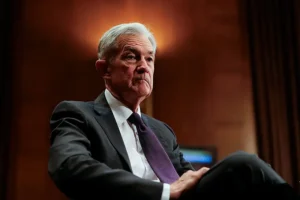
At a Wednesday press conference at the State Emergency Operations Center, Walz delivered a pointed message to the Trump administration: “From here on, I have a very simple message: We do not need any further help from the federal government. To Donald Trump and Kristi Noem, you’ve done enough.”
Walz called the shooting “totally predictable and totally avoidable,” blaming what he characterized as the Trump administration’s strategy of governance by “reality TV.”
“We’ve been warning for weeks that the Trump administration’s dangerous, sensationalized operations are a threat to our public safety, that someone was going to get hurt,” Walz said. “What we’re seeing is the consequences of governance designed to generate fear, headlines and conflict. It’s governing by reality TV, and today that recklessness cost someone their life.”
The governor also made a comment that would become central to the constitutional debate that followed. When asked whether he might deploy the National Guard against federal agents, Walz acknowledged the unprecedented nature of the situation: “We’ve never been at war with our federal government.”
He emphasized that the National Guard’s role would be to protect Minnesotans: “To Minnesotans, on the National Guard, they’re there to protect you and protect your constitutional rights. These are our neighbors. They don’t wear masks. They don’t bust in from somewhere else.”
Constitutional Crisis Brewing
Walz’s National Guard mobilization has triggered fierce pushback from congressional Republicans, who argue the governor may be preparing to obstruct federal law enforcement.
Representative Mary Miller of Illinois led the charge, posting on social media: “Invoke the Insurrection Act. Arrest Tim Walz.”
The Insurrection Act gives the president authority to deploy military forces to suppress civil disorder or insurrection, though its use is rare and typically limited to extreme circumstances. It was last invoked during the 1992 Los Angeles riots.
Representative Nancy Mace of South Carolina echoed Miller’s demands: “Someone remind him: Donald Trump is the Commander in Chief. And federal authority supersedes state authority. That’s not an opinion, that’s the Constitution. What Walz is threatening has a name: insurrection. Mr. President, the law is on your side. Use it.”
Representative Rich McCormick of Georgia said he couldn’t see how else the administration should interpret Walz’s actions. “If he says with that intent to oppose — you’re bringing in military force. Let’s lay it out. I’m going to bring out military force to oppose a federal armed force. What does that sound like to the average person?” McCormick told reporters.
Legal experts note that the situation creates a complex constitutional question. While presidents can federalize National Guard troops under certain circumstances, governors have broad authority to deploy their state guards for protecting public safety, managing civil unrest, and supporting local law enforcement during emergencies.
Previous attempts by Trump to deploy federal forces or federalized troops in Portland, Los Angeles, and Chicago during his first term were blocked by federal courts, which ruled there was insufficient evidence that federal agents needed military assistance to enforce the law. The U.S. Supreme Court affirmed this view in a decision last month.
CNN legal analysts suggest that if Minnesota National Guard troops were deployed alongside federal immigration agents, it could test longstanding questions about control of the Guard that have never been fully resolved in court.
Investigation Controversy Deepens Divide
Adding another layer of complexity to the crisis, Minnesota’s Bureau of Criminal Apprehension announced Thursday that the FBI had reversed course on what was initially supposed to be a joint investigation of the shooting.
According to the BCA, the U.S. Attorney’s Office decided the investigation would now be “led solely by the FBI,” cutting off the state agency’s “access to the case materials, scene evidence or investigative interviews necessary to complete a thorough and independent investigation.”
The BCA said it could not conduct a proper use-of-force investigation “without it,” though the agency offered to help preserve evidence for the FBI.
Walz called the decision to exclude state investigators deeply troubling. “I just want to make this as clear as possible to everyone: Minnesota must be part of this investigation,” Walz said. “These are nonpartisan career professionals that have spent years building the trust of the community.”
The governor emphasized that the BCA’s Force Investigations Unit was specifically created by the Minnesota Legislature to independently investigate law enforcement use-of-force cases following George Floyd’s murder in 2020.
Hennepin County Prosecutor Mary Moriarty said her office was “exploring all options to ensure a state level investigation can continue.”
Protests and Public Safety Concerns
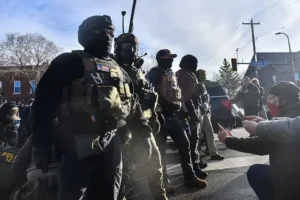
Since the shooting, Minneapolis has seen daily protests, with thousands taking to the streets. On Thursday, protesters clashed with law enforcement outside a federal immigration building, prompting concerns about escalating violence.
Minneapolis Public Schools canceled classes for the remainder of the week, citing safety concerns after ICE agents used pepper spray and pepper balls against students at Roosevelt High School. Faculty reported that armed ICE officers had handcuffed two staff members.
Despite the tensions, Walz praised the largely peaceful nature of the demonstrations. “Minnesotans have met this moment. Thousands of people have peacefully made their voices heard. Minnesota: Thank you. We saw powerful peace,” he said in a statement Thursday.
But the governor also issued a warning about potential federal escalation: “Do not take the bait. Do not allow them to deploy federal troops into here. Do not allow them to invoke the Insurrection Act. Do not allow them to declare martial law.”
Mayor Frey echoed those concerns: “They want an excuse to come in and show the kind of force that will create more chaos and more despair. Let’s not let them.”
The Broader Context
The Minneapolis shooting is part of a broader surge in immigration enforcement that has transformed the Twin Cities into a flashpoint in the Trump administration’s immigration policy.
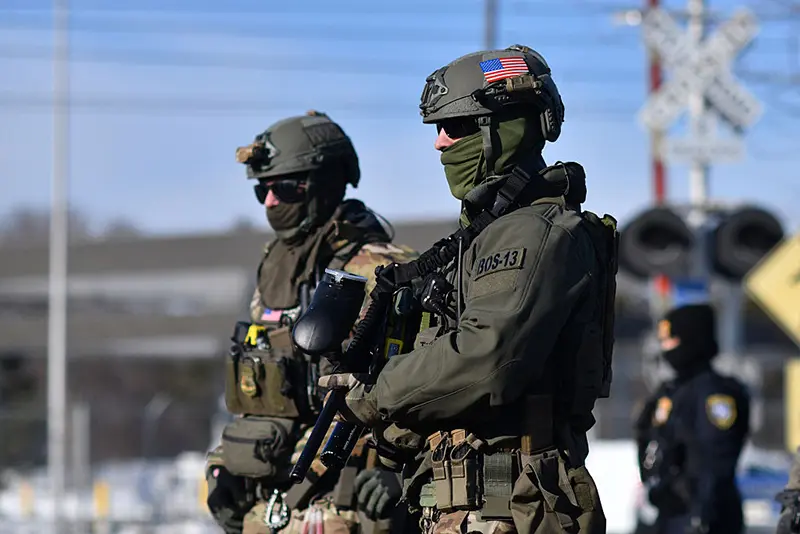
On January 6, the Department of Homeland Security announced what it called the largest immigration enforcement operation ever carried out, deploying 2,000 agents to the Minneapolis-Saint Paul metropolitan area. The surge was initially focused on investigating alleged fraud in Minnesota’s social services programs, particularly targeting Somali-run daycare centers.
The Minnesota Department of Children, Youth and Families investigated the allegations and found children present at all but one facility, which had closed in 2022.
Since September 2025, ICE agents have opened fire nine times during enforcement operations, resulting in five deaths including Good’s. A similar shooting occurred in Portland on the same day as the Minneapolis incident, where a man and woman were shot by a Border Patrol agent during what federal officials described as a “vehicle ramming” incident.
Saint Paul City Council member Molly Coleman described the environment created by the federal presence as “unlike any other day we’ve experienced.”
What Happens Next
As tensions remain high in Minneapolis, multiple questions loom over the coming days and weeks.
Will President Trump invoke the Insurrection Act against Minnesota’s governor? Will Walz actually deploy National Guard troops, and if so, what would their mission be? Can state and federal investigators find common ground on investigating Good’s death? And most fundamentally: Who has the authority to enforce federal immigration law when state officials believe federal agents are acting recklessly?
These questions strike at the heart of American federalism and the balance of power between state and federal governments — issues that the Founders debated but never fully resolved.
For now, Minneapolis remains on edge, caught between competing visions of law, order, and justice in an increasingly polarized nation.
The memorial for Renee Nicole Good continues to grow at the site where she was killed, with flowers, candles, and signs reading “Killer ICE off our streets” and “RIP Renee, murdered by ICE.”
At a vigil Wednesday evening, mourners surrounded the makeshift shrine and chanted Good’s name. They also chanted: “Say it once. Say it twice. We will not put up with ICE.”
As one mother whose child attended school with Good’s son told reporters: “She was a warrior. She died doing what was right.”
Whether history will judge the events of January 7, 2026 as a justified use of force or an unnecessary tragedy may depend on which investigation ultimately prevails — and whether Americans can find common ground in an era of deepening division.
The FBI investigation is ongoing. The Hennepin County Attorney’s Office is exploring options for a parallel state investigation.
Maria Jones is a writer for U.S. politics, elections, public policy, and the cultural debates shaping American governance.