By Howard Bingham — January 16, 2026
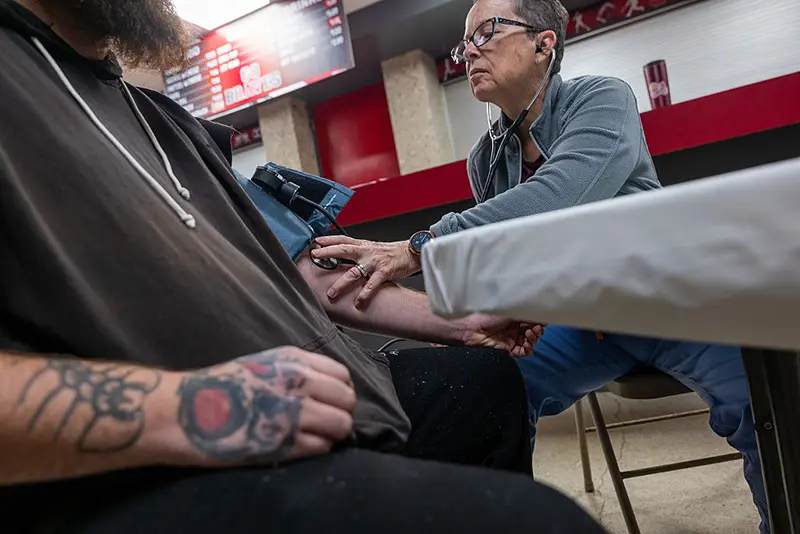
WASHINGTON — President Donald Trump announced a major federal investment in rural healthcare Friday at a White House roundtable, unveiling the Rural Health Transformation Program, a $50 billion, five-year initiative designed to bolster medical services in rural America. The effort allocates $10 billion annually from 2026 through 2030 to states for rural hospital support, workforce development, and expanded care access, with funding now distributed to all 50 states.
Historic Funding for Rural Communities
Under the program — part of Trump’s broader Working Families Tax Cuts Act — the Centers for Medicare & Medicaid Services (CMS) has awarded first-year rural healthcare funds averaging about $200 million per state, with individual state allocations ranging from roughly $147 million to $281 million. These funds are intended to modernize facilities, grow healthcare workforces, support technological upgrades, and support innovative care models in rural regions.
Officials hailed the initiative as the largest federal investment in rural healthcare to date. CMS will oversee implementation through state partnerships, annual reporting, and an annual rural health summit to share best practices.
Trump Connects Healthcare Push to 2026 Midterms
At the roundtable, Trump explicitly tied the rural healthcare initiative to the upcoming 2026 midterm elections. In remarks broadcast live, he urged attendees to “remember this in the midterms” and criticized Democratic lawmakers, saying “the Democrats are just so horrible toward the rural community.”
Several GOP members of Congress from competitive districts joined Trump at the event. Critics have noted the political timing aligns with broader campaign messaging on affordability and rural support.
What It Means for Rural Hospitals
Rural hospitals have long operated on thin financial margins and face demographic and economic pressures that challenge sustainable operations. Many facilities rely heavily on public health insurance reimbursements and struggle with workforce shortages and lower patient volumes.
However, health policy analysts caution that the $50 billion infusion — while unprecedented — may not fully offset the broader fiscal impact of federal budget and Medicaid changes embedded in legislation passed last year. Independent analyses estimate that rural hospitals could face up to roughly $137 billion in net funding losses over the next decade due to cuts in Medicaid and related programs. Those projections suggest the rural fund will cover only a fraction of anticipated revenue shortfalls.
State health networks and hospital associations see the funding as a lifeline for critical care access. Yet experts emphasize that long-term sustainability will depend on additional structural reforms, workforce recruitment, and local implementation strategies.
Broader Economic and Healthcare Context
Economic indicators underscore persistent challenges in the health sector and rural economies:
- Inflation has moderated from earlier peaks, but healthcare costs remain a major expense for families, particularly in rural areas with less competition among providers. (Federal Reserve inflation data)
- Labor markets in rural counties often lag broader U.S. employment growth, and healthcare is frequently a key local employer. (Bureau of Labor Statistics labor data)
- Medicaid coverage plays a substantial role in rural healthcare funding, with rural populations disproportionately dependent on the program compared to urban counterparts. (Kaiser Family Foundation data)
Changes to Medicaid reimbursement structures and eligibility rules — components of federal budget legislation — have heightened uncertainty for rural providers and policymakers alike.
What Comes Next
States and rural health stakeholders will begin implementing transformation plans this year. CMS officials will monitor progress, and annual evaluations will inform adjustments in how funds are used to maximize impact on rural care access and quality.
As the 2026 midterms approach, rural healthcare funding is poised to remain a centerpiece of campaign messaging across party lines, influencing debates over federal priorities and healthcare policy.