By Josh Hightower — January 16, 2026
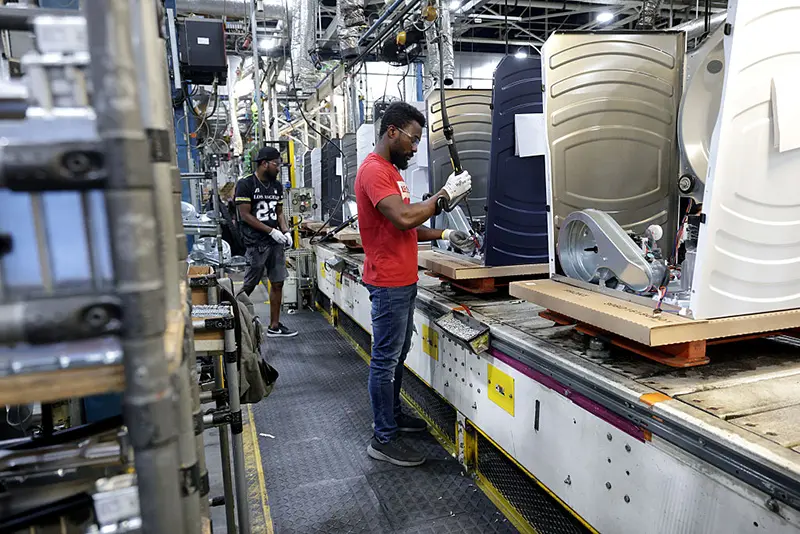
WASHINGTON — U.S. manufacturing is showing some of its strongest productivity growth in years, with output climbing, wages rising faster than inflation, and business investment in capital goods remaining robust — a combination that signals an evolving—but improving—industrial sector.
Productivity Growth at Multi‑Year Highs
Federal data released earlier this month shows that manufacturing labor productivity rose by 3.3 % in the third quarter of 2025, driven by a 2.6 % increase in output even as hours worked declined, according to the U.S. Bureau of Labor Statistics. On a year‑over‑year basis, manufacturing productivity expanded 2.3 % — the strongest four‑quarter increase since 2021.
Across the broader economy, nonfarm business productivity climbed 4.9 % in the same quarter, marking a notable acceleration from earlier in the year and underscoring a broader rebound in output per hour.
Output Rebounds and Investment Signals
Manufacturing output has shown signs of resilience after a prolonged period of weakness. New orders for nondefense capital goods excluding aircraft — a widely tracked proxy for business investment intentions — stood at roughly $78 billion in October 2025, up both from earlier in the year and from the same period in 2024.
While headline durable goods orders have experienced volatility due in part to the unpredictable aircraft segment, core capital goods bookings — which more directly signal firms’ willingness to expand capacity — have broadly risen, suggesting confidence among manufacturers in future demand.
Wage Growth Outpacing Inflation
American factory workers are benefiting from a tight labor market. While manufacturing employment trends have varied across segments, average hourly earnings in the sector continued to rise in late 2025, contributing to overall wage gains that outpaced inflation for many workers. Federal Reserve and Bureau of Labor Statistics figures show that nationwide inflation measured by the Consumer Price Index held near 2.7 % in December, while wage measures for production workers grew more rapidly.
Adjusted for inflation, real average hourly earnings have also posted modest gains, a key indicator of purchasing power improvements for wage‑earners.
Employment and Sector Challenges
Despite productivity and wage advances, job growth across the manufacturing sector remains uneven. National labor reports indicate slower job gains in 2025, with some months showing declines in factory employment — a contrast with broader service‑sector and health care hiring, according to Wall Street Journal employment reporting.
Economists note that hiring trends often lag behind output and investment metrics, particularly in capital‑intensive sectors where automation and technology adoption can raise output without proportionate increases in headcount.
Why This Matters
The convergence of rising productivity, strengthening output, solid capital investment, and real wage gains matters for the broader U.S. economy. Productivity growth is a fundamental driver of long‑term living standards and corporate competitiveness. Higher output per hour can help firms absorb wage increases without eroding margins, while sustained investment in capital goods often precedes future expansions in production capacity.
For policymakers, these indicators offer a nuanced picture of manufacturing’s trajectory: traditional headline measures like employment and PMI surveys can paint a mixed portrait, but hard data on output and investment suggest underlying momentum.
Looking Ahead
Economists and industry analysts will be closely watching the January durable goods and capital investment figures, due later this month, as well as Federal Reserve and BLS productivity releases for early 2026. Continued improvements in productivity and investment — especially if paired with stable inflation — could strengthen the case for sustained manufacturing growth.
However, structural challenges such as tight labor markets, shifting global supply chains, and sector‑specific headwinds (e.g., automotive and semiconductors) remain factors that could temper gains. For now, data through late 2025 and into early 2026 point to an industrial sector recalibrating toward efficiency and output expansion after years of stagnation.
Josh Hightower is a business news reporter focused on markets, technology, and the economic trends shaping modern industries.