By Wayne Roberts – January 29, 2026

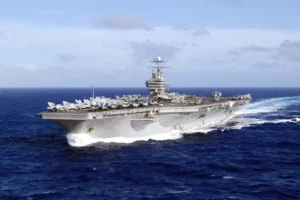
Washington – In a striking escalation of tensions with Tehran, President Donald Trump issued a warning to Iran that “time is running out” to reach a new nuclear agreement as a large U.S. naval force, led by the aircraft carrier USS Abraham Lincoln, has entered the Middle East region, signaling a possible preparation for military action if diplomatic efforts falter.
President’s Statement and Military Movements
President Trump took to social media on Wednesday to announce that a “massive armada,” larger than that previously deployed toward Venezuela, is headed toward Iran with “great power, enthusiasm, and purpose,” urging the Iranian leadership to “come to the table” and negotiate a nuclear deal aimed at preventing the acquisition of nuclear weapons.
The Abraham Lincoln Carrier Strike Group, along with several destroyers and support vessels, has arrived in the U.S. Central Command’s area of responsibility, a region that includes waters near Iran and the Persian Gulf. U.S. officials describe the deployment as part of efforts to promote regional security and deter further escalation.
Trump reiterated that failure to agree on a deal could lead to military action “far worse” than past strikes on Iranian nuclear facilities, referring to operations conducted in June 2025.
Iran’s Response and Regional Signals
Iranian officials responded sharply to the U.S. warnings. Foreign Minister Abbas Araghchi stated on the social platform X that Iran’s armed forces are “prepared – with their fingers on the trigger – to immediately and powerfully respond to ANY aggression,” while reaffirming Tehran’s willingness to negotiate a mutually respectful deal on nuclear matters without coercion.
Iran’s broader leadership has likewise signaled readiness to defend the nation. Separate statements from Iranian military figures emphasize that any U.S. strike, no matter how limited, would be treated as an all-out war, according to earlier reporting from senior Iranian officials.
Across the region, allies and neighbors have expressed concern. Some Gulf states have indicated they will not allow U.S. forces to use their airspace or territory for an attack on Iran, even as the military buildup continues.
Background: Nuclear Talks and Domestic Unrest
The tensions stem from longstanding disputes over Iran’s nuclear ambitions, ballistic missile programs, and violent suppression of nationwide protests that began in late December amid economic hardship and political grievances. Those protests have had significant human costs, with human rights groups reporting thousands of deaths and tens of thousands of arrests.
The Trump administration has linked the potential for military action to Iran’s treatment of protesters as well as continued enrichment of nuclear material, framing the naval deployment as both deterrence and leverage for diplomacy.
Economic Indicators and Global Impact Considerations
Although detailed economic data tied directly to the current geopolitical standoff is still emerging, tensions of this scale often influence global energy markets, particularly given Iran’s proximity to the Strait of Hormuz, a chokepoint for a substantial fraction of the world’s oil shipments. Historical patterns suggest that heightened military threats in the region can lead to upticks in oil price volatility and shifts in investor sentiment. Current inflation and employment data from Western markets remain relatively stable, but risk premiums tied to geopolitical uncertainty are likely to rise as developments unfold.
With both sides maintaining firm positions, diplomatic channels remain tenuous. The United States continues to state that it prefers a negotiated outcome, while reserving the right to act militarily if it judges that Iran’s programs or actions significantly threaten U.S. interests or regional stability. Tehran insists that negotiations must be free of coercion and that it will defend its sovereignty.
Analysts caution that the deployment of significant U.S. forces, including carrier strike groups and aerial assets, raises the stakes for potential miscalculation. Regional allies and international actors are advocating for de-escalation, but there is as yet no clear pathway to a diplomatic breakthrough.
Wayne Roberts is a journalist specializing in world affairs, covering international politics, global security, and major geopolitical developments.