By Greg Shipley — January 20, 2026

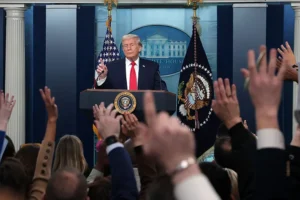
WASHINGTON, D.C. — President Donald J. Trump marked his first anniversary back in the White House on Tuesday with a sweeping record of executive actions, trade breakthroughs, and high-profile foreign policy moves that officials say have reshaped U.S. priorities at home and abroad.
Executive Action: A Record Pace of Direct Presidential Leadership
In his first year after returning to office on January 20, 2025, President Trump has signed an exceptionally high number of executive orders, using them to rapidly implement policy priorities across domestic and international fronts. According to Ballotpedia’s executive order tracker, the president had issued 228 executive orders by mid-January 2026, covering regulatory reform, border security, trade policy, and federal hiring rules.
Administration officials argue this approach has delivered swift policy results without prolonged legislative delays — a cornerstone of the White House’s “365 wins in 365 days” narrative.
Historic Trade Deals With Europe and Beyond
Trump’s team touts major commercial agreements reached with partners in Europe and the Western Hemisphere as some of the most consequential of the administration’s first year.
In July 2025, the United States and European Union announced a “historic trade deal” that establishes a 15% tariff rate on U.S. imports from the EU and unlocks expanded market access for American manufacturers, farmers, and energy exporters. The framework also laid the groundwork for hundreds of billions in EU investment into the U.S. economy and guaranteed increased European purchases of U.S. energy products.
Officials also highlighted new trade agreements with El Salvador, Argentina, Ecuador, and Guatemala, aimed at strengthening supply chains and boosting U.S. exports across the Western Hemisphere.
These deals are part of a broader strategy to rebalance international trade and fortify U.S. economic leadership, senior administration officials say.
Prescription Drug Prices: Large Reductions Through “Most-Favored-Nation” Agreements
Lowering drug costs has been a centerpiece of Trump’s domestic policy agenda. In September 2025, the White House announced its first Most-Favored-Nation (MFN) drug pricing deal with Pfizer designed to ensure American patients pay the same low prices as the lowest-priced developed countries.
According to reporting from Breitbart, Trump and administration allies claimed these MFN arrangements have spurred significant price drops on widely used medications — with some drugs falling by 1,200% to 1,400% compared with prior U.S. prices, even as the White House says more companies have signed on.
Critics have noted that official data on nationwide price impacts will continue to emerge in 2026 as these agreements take effect.
Foreign Policy and National Security: Capturing Nicolás Maduro
One of the most dramatic developments of Trump’s second year in office was the U.S. military capture of Venezuelan president Nicolás Maduro following a large-scale strike on Caracas on January 3. Maduro and his wife were seized by U.S. forces and flown to New York to face a slate of federal charges, including narcoterrorism and drug trafficking.
The operation, widely reported by CBS News and Reuters, marked a rare direct U.S. intervention against a sitting head of state and drew strong international reaction. Some analysts described the mission as the most significant U.S. military action in Latin America in decades.
While the White House framed the action as a major victory in combating regional drug trafficking and restoring democratic order, legal experts and international authorities have raised concerns about the operation’s basis under international law.
Government Policy Wins and Efficiency Reforms
Beyond trade and foreign policy, the administration has emphasized results on government efficiency, deregulation, and regulatory rollback, reporting on initiatives to streamline federal hiring, reduce bureaucratic waste, and cut back practices the White House describes as unnecessary or counterproductive.
The president’s supporters argue these actions — combined with tariff enforcement and border policy reforms — represent a holistic return to an “America First” governance model focused squarely on national security and domestic prosperity.
Greg Shipley covers U.S. news and politics, with a focus on constitutional issues, national security, and government accountability.