By Sarah A. Mansfield, January 16, 2026
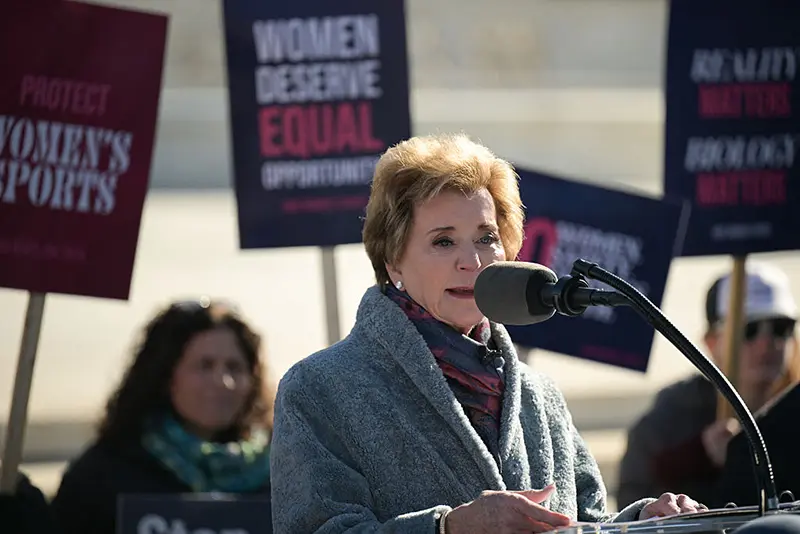
The Supreme Court on Tuesday heard closely watched oral arguments in cases that could reshape the future of women’s sports nationwide, as states defend laws barring transgender women and girls from competing on female athletic teams.
At the center of the legal fight are challenges to laws in Idaho and West Virginia, where state legislatures enacted protections defining eligibility for women’s sports based on biological sex. The cases, including West Virginia v. B.P.J., have drawn intense national attention as courts, lawmakers, and athletic organizations wrestle with how to balance inclusion with competitive fairness. According to Reuters’ coverage, the justices are being asked to decide whether such laws violate the Constitution’s Equal Protection Clause or federal civil rights protections under Title IX.
Adding political weight to the arguments, more than 200 female lawmakers signed an amicus brief urging the Court to uphold the state bans. In the filing, the lawmakers argued that women’s sports exist to account for “biological differences between the sexes” and warned that abandoning sex-based criteria would undermine decades of progress for female athletes. The brief, summarized by Gender on the Ballot, emphasizes biology rather than “a person’s sense of gender” as the appropriate standard for athletic competition.
During oral arguments, attorneys for Idaho and West Virginia stressed that the laws are designed to preserve fairness and safety, not to target transgender students. As Reuters reported, several conservative justices questioned whether states have the authority to draw sex-based lines in sports in order to protect competitive integrity — a line of inquiry that appeared sympathetic to the states’ position.
Liberal justices, however, pressed state attorneys on whether blanket bans unfairly exclude a small number of students, particularly those who have not undergone male puberty or who follow medical protocols to suppress testosterone. They pointed to past Supreme Court rulings expanding protections for transgender individuals in other contexts, a concern highlighted in Associated Press coverage.
Supporters of the bans argue that the science is clear. They cite physiological advantages associated with male puberty — including bone density, muscle mass, and lung capacity — as reasons why sex-based divisions remain essential in athletics. Those arguments are outlined in filings supporting the states and summarized by legal analysts at Liberty Counsel, which has closely followed the cases.
Opponents counter that the laws rely on broad generalizations and harm individual students. In West Virginia v. B.P.J., attorneys for the transgender athlete argue that their client complies with hormone treatment guidelines and poses no competitive threat. Civil rights groups backing that position say categorical exclusions conflict with Title IX’s purpose of expanding, not limiting, athletic opportunities — a claim examined in AP News’ explainer on the case.
The debate has also spilled into Congress. While Republican lawmakers largely back the state bans, Democratic lawmakers filed briefs supporting the athletes challenging the laws, arguing that excluding transgender students from sports stigmatizes them and erodes equal access to education, as reported by Breitbart.
The stakes are high. A ruling upholding the bans could cement similar laws in more than two dozen states and give legislatures wide latitude to regulate gender eligibility in sports. Striking them down, legal experts say, could force states to revisit existing policies and potentially expand federal protections. As Reuters’ analysis notes, the Court’s decision could set a national standard with implications far beyond school gymnasiums and track fields.
The justices are expected to issue a ruling by early summer, setting the tone for how America defines fairness in women’s sports for years to come.
Sarah A. Mansfield is a journalist covering the latest breaking news, delivering timely, accurate reporting on fast-moving stories as they unfold.