By Susan S. Moore – January 16, 2026
WASHINGTON — The Pentagon has ordered a U.S. carrier strike group toward the Middle East, underscoring deepening tensions between Washington and Tehran as the hard-line Iranian regime faces widespread protests and violent crackdowns at home. The move comes as President Donald Trump maintains that “all options are on the table” in dealing with Iran’s internal unrest and regional posture, while key Gulf allies — including Saudi Arabia, Qatar, Oman and Turkey — press for restraint to avoid broader conflict.
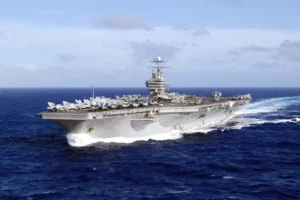
According to U.S. defense officials, the USS Abraham Lincoln and its accompanying surface vessels and submarines are being repositioned from the South China Sea toward the U.S. Central Command area of operations, which includes the Persian Gulf and wider Middle East. The repositioning, expected to take about a week, signals heightened readiness even as diplomatic efforts to avert outright military confrontation continue.
At the Pentagon, military planners have made clear that bolstering the U.S. presence in the region is about deterrence and preparedness, not immediate action. Additional aircraft and land-based air defense systems are also being readied to support the enhanced posture.
Diplomatic Pressure From Regional Allies
Despite the military buildup, several U.S. partners in the Middle East have urged the Trump administration to hold off on airstrikes or other direct military action against Iran — warning that any such intervention could provoke widespread regional chaos, spike global oil prices, and even trigger retaliatory attacks on U.S. forces. Saudi Arabia, Qatar and Oman have been particularly vocal, with some reports indicating they even offered limited diplomatic assurances to discourage a strike and protect regional stability.
Turkey, another key regional player, has similarly lobbied for restraint, emphasizing diplomacy and negotiation over military escalation. Collectively, these governments argue that the risk of creating a power vacuum or igniting broader conflict outweighs potential benefits of a strike on Tehran.
Trump’s Calculus: Pressure Without War
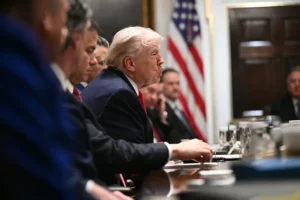
President Trump’s rhetoric toward Tehran has shifted in recent days from promises of “very strong action” to a more measured approach — even as he reiterated that military options remain under serious consideration. At a recent press briefing, Trump said U.S. intelligence suggested that the recent wave of violent crackdowns and executions in Iran have “stopped,” though he did not rule out escalation should the situation deteriorate again.
At a United Nations Security Council session, U.S. Ambassador to the U.N. Mike Waltz made clear that President Trump remains committed to supporting the Iranian people and confronting Tehran over its internal repression, stating that “all options are on the table” to address the situation. Iran’s U.N. delegate countered by accusing Washington of fomenting unrest and vowed Tehran would respond forcefully to any act of aggression.
In parallel with the military buildup, Washington has expanded economic pressure, imposing new sanctions on Iranian officials and entities tied to the suppression of protests and illicit economic activity. These measures aim to tighten the squeeze on the Iranian regime without immediately resorting to kinetic strikes.
A Region on Edge
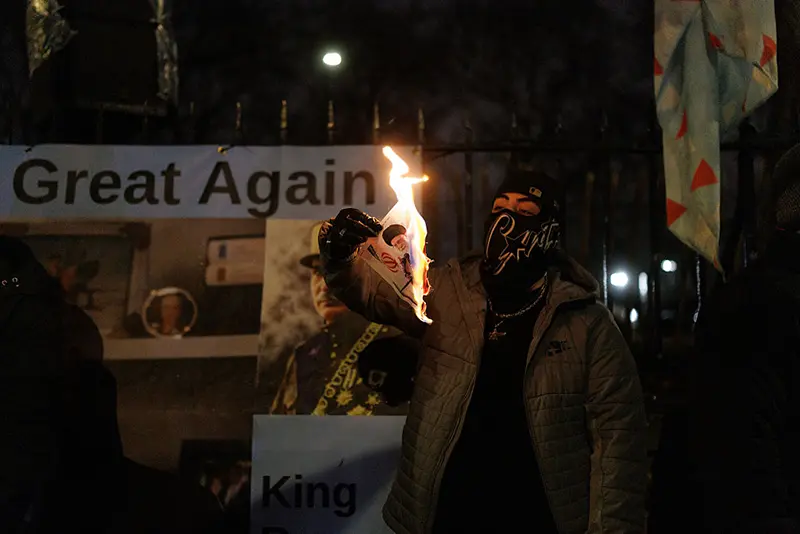
Iran’s nationwide protests — sparked by economic hardship, political repression and a desire for reform — have entered a volatile phase, with human rights monitors estimating thousands killed and thousands more detained amid internet blackouts that complicate independent verification. While Tehran briefly reopened its airspace following signs of diplomatic de-escalation, critics remain skeptical about any lasting reduction in violence.
For now, the United States is balancing a complex strategy: projecting strength through military positioning, supporting regional allies wary of escalation, and leveraging sanctions to isolate Iran economically. As the situation continues to unfold, Trump’s ultimate decision — whether to intensify pressure, pursue diplomacy or wield military force — will have profound implications for U.S. foreign policy and Middle East stability.
Susan S. Moore is a world news reporter focused on international diplomacy, conflict, and the political forces shaping global relations.