By Maria Jones | January 13, 2026
WASHINGTON — In a series of consequential oral arguments Tuesday, the U.S. Supreme Court appeared poised to uphold laws that protect women’s and girls’ sports by allowing states to restrict participation to athletes based on biological sex, a position that drew significant attention both inside and outside the highest court in the land.
Justices heard lengthy arguments in two consolidated cases — West Virginia v. B.P.J. and Little v. Hecox — which challenge state laws from West Virginia and Idaho that bar transgender females from competing in female athletics. These laws, backed by 25 other states with similar protections, are defended as essential to fair competition and the preservation of Title IX’s guarantees for women and girls.
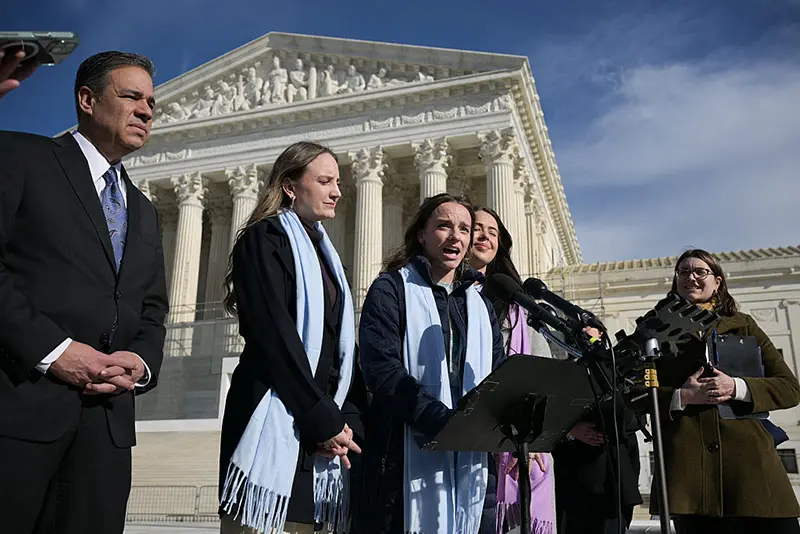
Outside the Supreme Court, women and girls rallied on the steps in support of sex-based sports protections, many holding signs and calling on justices to preserve fairness and opportunity in athletic competition. Concerned Women for America and sister groups organized the demonstration, emphasizing the importance of biological sex distinctions in sports.
Inside the courtroom, conservative justices aggressively questioned the challengers’ legal positions. Justice Samuel Alito notably pressed an ACLU-aligned attorney on the meaning of “woman” in the context of equal protection law, highlighting the difficulty in defining the term within existing statutory frameworks. When pressed on how to distinguish boys from girls or men from women in sports, Kathleen Hartnett, representing the Idaho respondent, acknowledged the need for a definition but struggled to offer one that satisfied the justices’ concerns.
The cases hinge on questions central to constitutional law: whether states may enforce sex-based eligibility rules in sports without violating the Equal Protection Clause, and whether a state’s definition of sex for athletic purposes must align with gender identity or remain rooted in biological distinctions. Lower federal courts struck down the challenged laws as discriminatory under Title IX and the Equal Protection Clause, setting the stage for Tuesday’s high-stakes review.
Several conservative justices appeared skeptical of the arguments against the state laws, openly discussing the physical differences between biological males and females and the implications for competitive fairness — suggesting the Court could side with the states. That sentiment aligns with comments from West Virginia Attorney General JB McCuskey, who told Fox News Digital that the core of the dispute is “about protecting women in both academia and on the athletic field” while upholding equal protection.
Liberal justices, however, pointed to concerns over discrimination and the legal implications for transgender individuals’ civil rights. The American Civil Liberties Union (ACLU), which represents the respondents, frames the case as one with far-reaching consequences for Title IX and other federal protections against sex discrimination, even as it pushes back against sweeping sex-based classifications.
The outcome of these cases could redefine how sex is understood in U.S. civil rights law and set precedents that extend far beyond athletic fields — into education, employment, and other arenas where Title IX and the Equal Protection Clause intersect. A decision is expected by the end of the Court’s term in June 2026.
Maria Jones is a writer for U.S. politics, elections, public policy, and the cultural debates shaping American governance.